
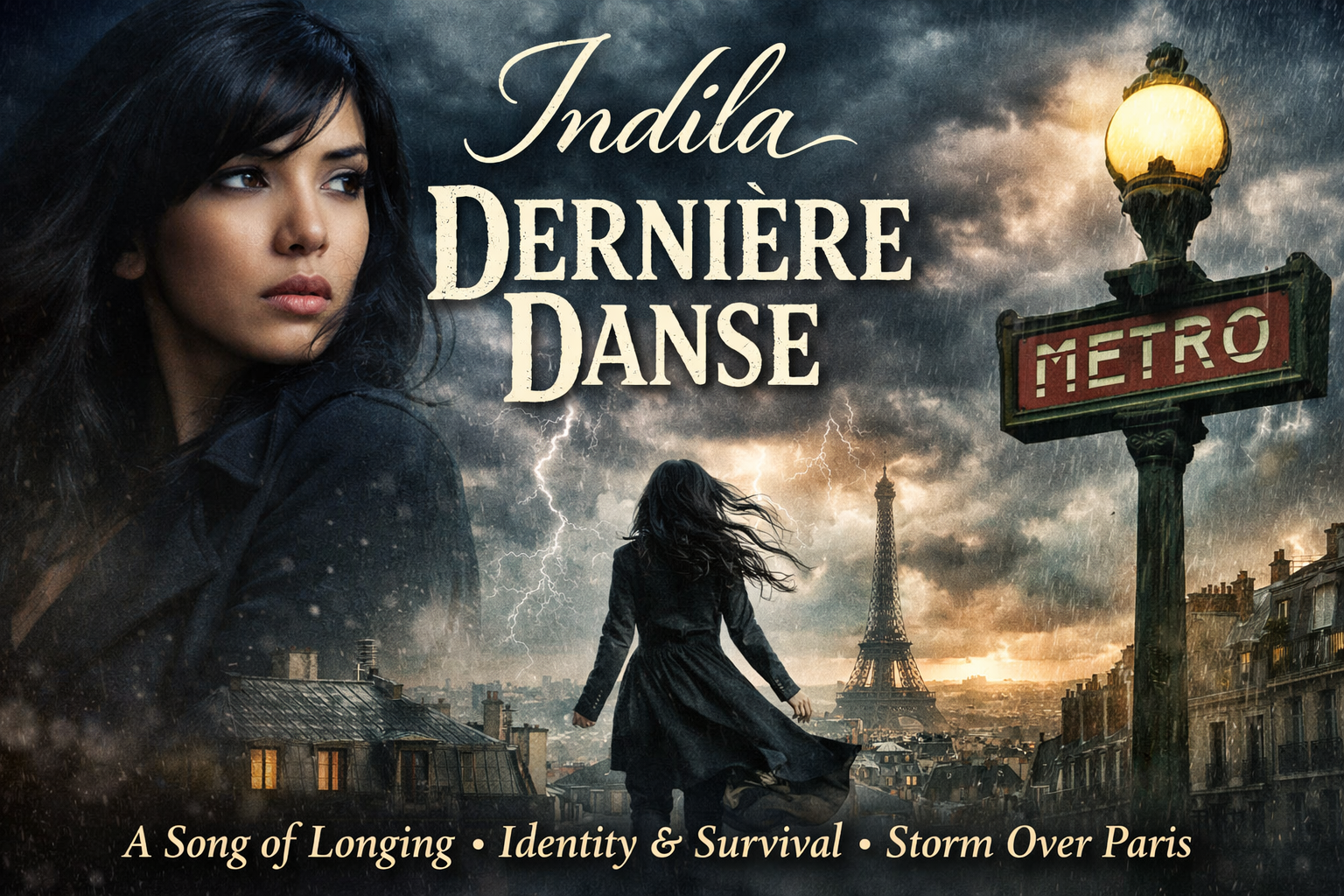
“Dernière Danse” is the breakout single from Indila’s debut album Mini World, and it remains one of the most emotionally powerful French songs of the last decade. Blending haunting melodies with poetic lyrics, the song captures feelings of alienation, resilience, and longing—set against the backdrop of Paris.
In this article, we explore the lyrics meaning, emotional themes, and cultural context of Dernière Danse, while also breaking down key French expressions used in the song.
About the Song: Dernière Danse by Indila
Released as Indila’s first single, Dernière Danse immediately stood out for its cinematic sound and deeply personal storytelling. Written by Indila and her husband and producer Skalpovich, the song set the emotional tone for the entire Mini World album.
Indila has often described herself as someone whose emotions feel “too big for words,” and Dernière Danse was the first time she felt she had truly captured those feelings in a song. Once it was written, the rest of the album followed naturally.
Who Is Indila?
Indila is famously private, but she has shared that she is a “child of the world.” Born and raised in France, she has Algerian, Cambodian, Indian, and Egyptian heritage. She sings in French, English, and even Hindi, and chose the stage name “Indila” because of her admiration for Indian culture.
This multicultural identity plays a crucial role in the themes of Dernière Danse.
What Is Dernière Danse About?
At its core, Dernière Danse tells the story of a young immigrant woman in Paris, struggling with exclusion, discrimination, and emotional isolation. The song expresses what it feels like to exist on the margins—working endlessly, hoping for acceptance, and carrying pain quietly.
The “last dance” is not about romance or celebration. Instead, it symbolizes a final act of freedom, self-expression, and emotional release before giving in to despair—or before starting over.
Lyrics Breakdown & Meaning
Verse 1: “Ô ma douce souffrance”
The song opens with one of its most striking lines:
“Ô ma douce souffrance” (Oh my sweet suffering)
Indila personifies her pain, speaking to it directly. Phonetically, this line echoes the famous phrase “Douce France” (Sweet France), subtly linking her suffering to the country itself.
By pairing sweet and suffering, Indila creates a powerful contradiction—suggesting that pain has become a constant, almost familiar companion.
She describes wandering alone in the Paris métro, feeling anxious and invisible. The slang term “paro” (short for paranoid) reflects discomfort, unease, and emotional vulnerability.
The Meaning of “Dernière Danse”
When Indila sings about taking “une dernière danse”, she’s not talking about a literal dance. This “last dance” represents:
- A final attempt to escape pain
- A moment of self-liberation
- A way to forget overwhelming sorrow
- An act of survival through movement and expression
Dance becomes her coping mechanism.
Chorus: Power, Movement & Escape
The chorus explodes emotionally and musically:
“Je remue le ciel le jour, la nuit”
(Literally: I move the sky day and night)
This line references the French expression “remuer ciel et terre”, meaning to move heaven and earth. Indila is saying she works relentlessly—physically, emotionally, spiritually.
The imagery shifts from the city to nature:
- Wind
- Rain
- Sky
- Flight
Despite fear and pain, she keeps dancing. She keeps moving.
Her question—“Est-ce mon tour ?” (Is it my turn?)—expresses deep longing. Longing for acceptance. Belonging. Peace.
Music & Emotion: Calm Outside, Storm Inside
One of the most powerful aspects of Dernière Danse is the contrast between sound and meaning.
- Verses: Light, almost playful, suggesting calmness
- Chorus: Explosive, dramatic, emotionally raw
This mirrors Indila’s inner world—appearing composed on the outside while carrying overwhelming emotions within.
In the music video, her internal pain becomes a literal storm that engulfs Paris, forcing the city to feel what she feels every day.
Bridge 1: Life Without “You”
The first bridge introduces ambiguity. Indila sings about life feeling empty without “you,” but it’s unclear who—or what—this is.
It could represent:
- A lost person
- A sense of dignity
- Acceptance
- Equality
- Belonging
This uncertainty makes the song more universal.
Bridge 2: “Je suis une enfant du monde”
This is one of the most meaningful lines in the song.
Indila sings about paying for “all the offenses” through suffering—suggesting she bears the weight of prejudices that aren’t truly hers.
Then comes the emotional twist.
Instead of saying “Je suis une enfant de France” (I am a child of France), which the rhyme structure suggests, she chooses:
“Je suis une enfant du monde” (I am a child of the world)
This is a powerful statement of identity. Rather than claiming belonging to a country that rejects her, she claims the world.
Read also:-
Final Thoughts:-
Dernière Danse is more than a song—it’s a story of:
- Emotional survival
- Cultural identity
- Quiet resistance
- The search for belonging
Its lyrics speak to immigrants, outsiders, and anyone who has ever felt unseen. Indila’s ability to turn personal pain into universal art is what makes this song timeless.
And yes—she absolutely sells every emotion in the video. That look alone says everything words cannot.