
“Go, Tell It on the Mountain” is one of the most beloved Christmas hymns in the English-speaking world. Rooted in African American spiritual tradition, this powerful song proclaims the birth of Jesus Christ with joy, urgency, and hope. Sung in churches, schools, concerts, and homes every Christmas season, the hymn carries deep historical, biblical, and cultural significance that continues to resonate today.
Origins of “Go, Tell It on the Mountain”
“Go, Tell It on the Mountain” originated as an African American spiritual in the United States during the 19th century. Like many spirituals, its exact origins are unknown, as it was passed down orally through generations. The hymn was first formally published in 1907 in Folk Song of the American Negro by John Wesley Work Jr., a pioneering scholar and collector of African American folk music.
Later, John W. Work Jr. (often credited as adapter) preserved and shaped the version widely sung today. His work at Fisk University and with the Fisk Jubilee Singers helped introduce African American spirituals to national and international audiences, ensuring their place in American sacred music.
Lyrics and Biblical Foundation
The hymn draws directly from Luke 2:8–20, the biblical account of angels announcing Christ’s birth to shepherds watching their flocks by night. Each verse builds the Nativity story, while the refrain delivers the central message:
“Go, tell it on the mountain,
Over the hills and everywhere,
That Jesus Christ is born.”
The refrain also echoes Matthew 28:19, the Great Commission, emphasizing proclamation and mission. This dual focus—Christ’s birth and the call to share the good news—gives the hymn both Christmas joy and evangelical urgency.
Song Lyrics:- go tell it lyrics
Go tell it on the mountain
Over the hills and everywhere
Go tell it on the mountain
That Jesus Christ is born!
While shepherds kept their watching
O’er silent flocks by night
Behold throughout the heavens
There shone a holy light
Go tell it on the mountain
Over the hills and everywhere
Go tell it on the mountain
That Jesus Christ is born!
The shepherds feared and trembled
When lo above the earth
Rang out the angel chorus
That hailed our Saviour’s birth
And I said go!
Go tell it on the mountain
Over the hills and everywhere
Go tell it on the mountain
That Jesus Christ is born!
Down in a lowly manger
Our humble Christ was born
And God sent us salvation
That blessed this Christmas morn
And I said go!
Go tell it on the mountain
Over the hills and everywhere
Go tell it on the mountain
That Jesus Christ is born!
Go tell it on the mountain
Over the hills and everywhere
Go tell it on the mountain
That Jesus Christ is born!
That Jesus Christ is born!
Meaning and Spiritual Significance
At its core, “Go, Tell It on the Mountain” is a song of liberation, testimony, and joy. For enslaved African Americans, spirituals often carried layered meanings—expressing Christian faith while also symbolizing hope, freedom, and resilience. The command to “go and tell” reflected not only the gospel message but also the human longing to proclaim deliverance.
Today, the hymn continues to inspire believers to share faith boldly and joyfully. Its lively rhythm and repetitive refrain make it accessible for congregational singing, while its message transcends denominational and cultural boundaries.
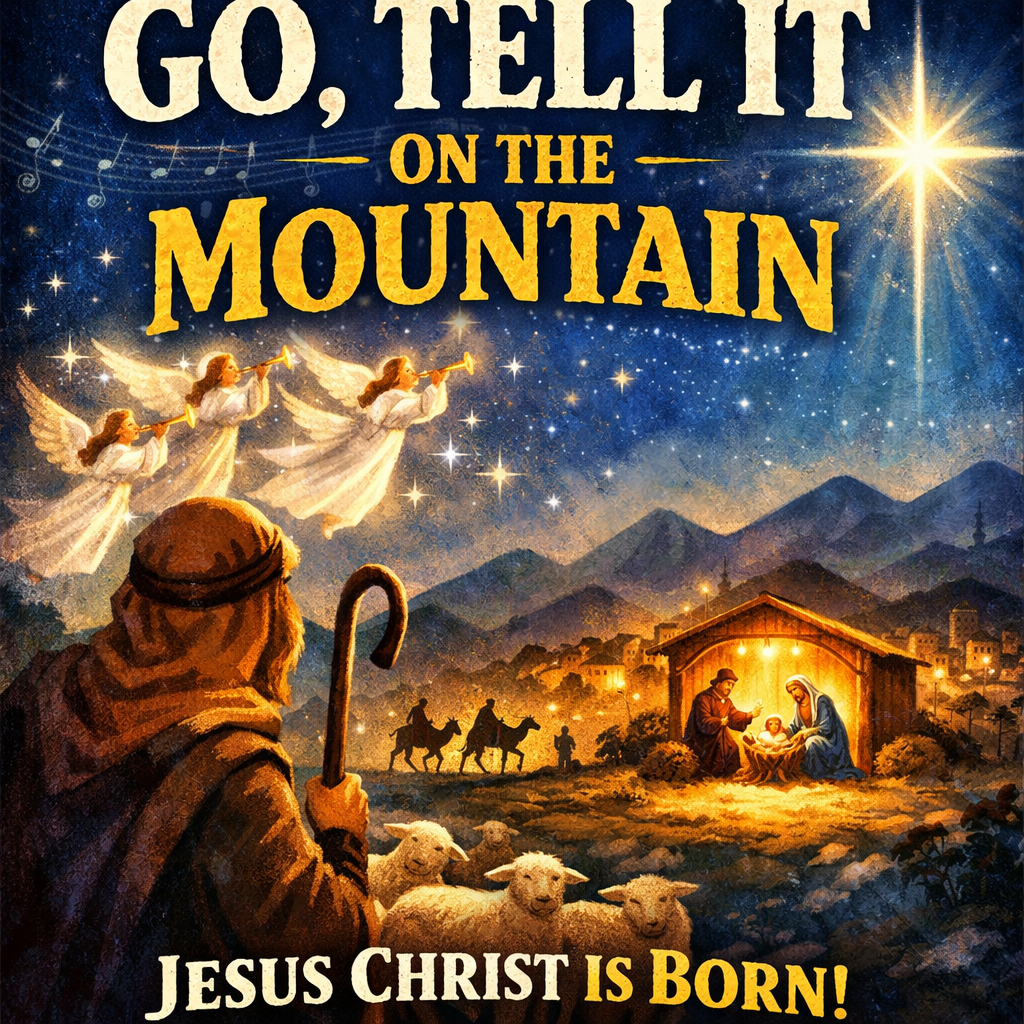
Musical Style and Use in Worship
Musically, the hymn features an irregular meter, characteristic of spirituals shaped by oral tradition rather than formal hymnody. It is commonly performed with piano, organ, choir, hand clapping, or full orchestral arrangements.
In Christian worship, “Go, Tell It on the Mountain” is most often used as a closing or sending song during Christmas services, reinforcing the idea of carrying the message of Christ into the world.
Why the Hymn Still Matters Today
More than a century after its publication, “Go, Tell It on the Mountain” remains relevant because it combines story, song, and mission. It reminds modern audiences that Christmas is not only about celebration but also about sharing hope, peace, and good news with others.
Its presence in over 120 hymnals, countless recordings, and global worship settings confirms its enduring spiritual and cultural power.
Read also:-
Frequently Asked Questions (FAQ)
Is “Go, Tell It on the Mountain” public domain?
Yes. The hymn is in the public domain, making it free to use, reproduce, and perform without copyright restrictions.
Who wrote “Go, Tell It on the Mountain”?
The hymn is an African American spiritual. It was adapted and published by John W. Work Jr., who helped preserve it for future generations.
What Bible verses is the hymn based on?
The verses are based on Luke 2:8–20, while the refrain reflects the missionary call of Matthew 28:19.
Why is this hymn important in African American history?
It represents the rich tradition of African American spirituals, which blended faith, resilience, and hope during times of oppression.
When is “Go, Tell It on the Mountain” typically sung?
It is most commonly sung during Christmas services, concerts, and celebrations, especially as a closing or sending hymn.
Final Thought:
“Go, Tell It on the Mountain” is more than a Christmas song—it is a timeless call to joyfully proclaim hope. Its message continues to echo “over the hills and everywhere,” reminding the world that good news is meant to be shared.